Published by Pinnacle Peak Recovery · a licensed addiction treatment facility in Scottsdale, AZ. Calls answered by Pinnacle Peak Recovery admissions staff.

About this site →
Menu

Arizona, addiction treatment

Addiction treatment in Arizona, the full continuum.

Pinnacle Peak Recovery treats substance use and co-occurring mental health conditions at our Scottsdale campus. This hub explains the levels of care, who they are for, and which page on this site to read next.

Call admissions 24/7888-AZ-REHABAnswered by Pinnacle Peak Recovery staff
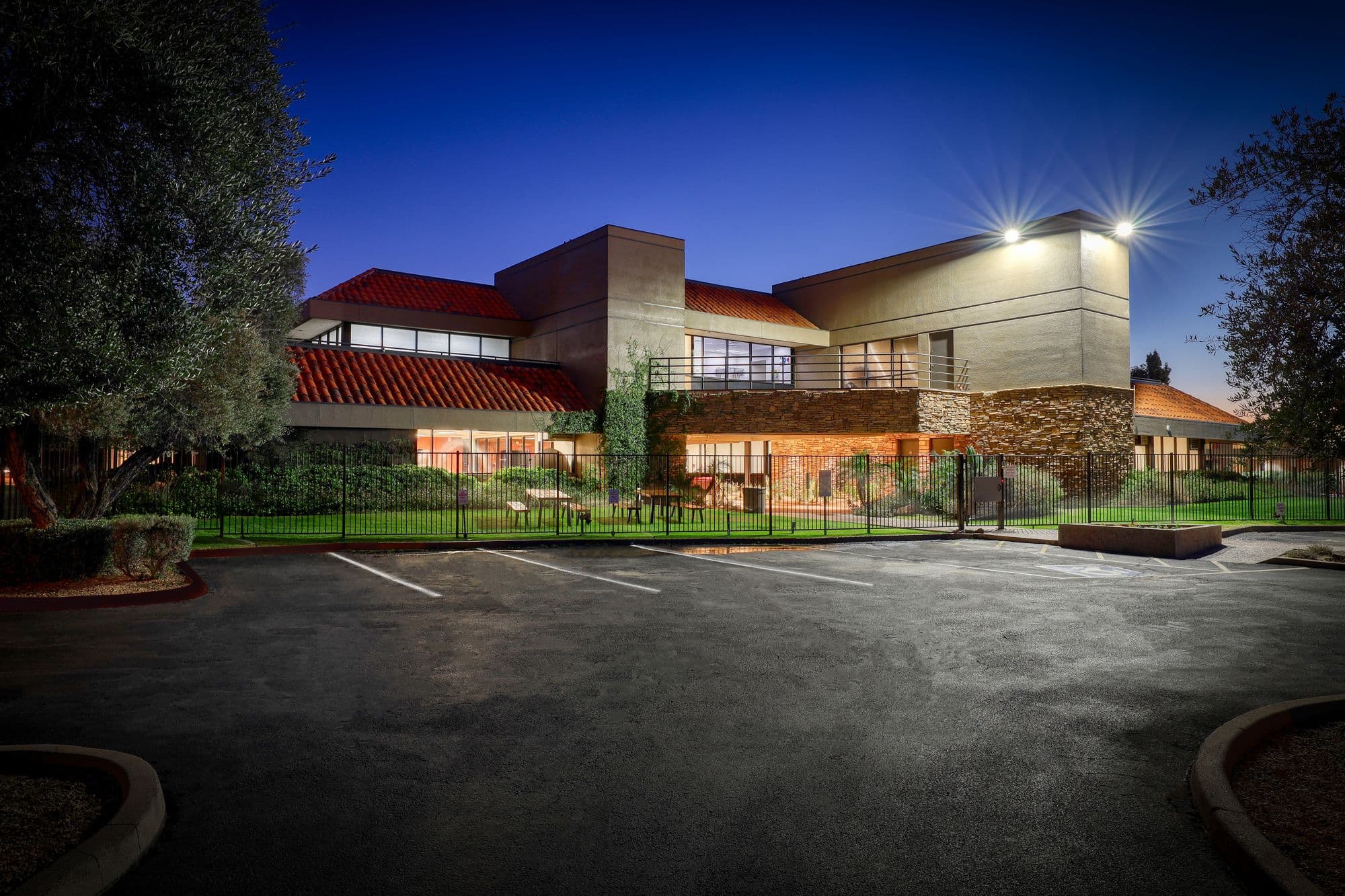
Exterior of the Scottsdale residential campus at dusk

If you are reading this, the question you are probably trying to answer is some version of, what does addiction treatment actually involve, and which kind do I or someone I love actually need. That is the first question, and it deserves a direct answer.

This page is the index. It covers the continuum of care in plain language, lists every condition we treat with a one-line explanation of who each page is for, and offers a decision-tree pointer to the page on this site that fits your situation best. The pages it links to are the longer-form clinical reads.

The framework worth carrying into this is that treatment is not a single thing. It is a sequence of clinical levels of care, each with a specific purpose, that fit together into a continuum. Detox stabilizes the body. Residential begins the behavioral work. Outpatient programming consolidates the change. Aftercare carries it forward. Most durable recoveries involve several of these in sequence, not just one.
The continuum of care

The levels of care, in plain language

The American Society of Addiction Medicine (ASAM) defines a set of clinical levels of care that almost every reputable addiction treatment program in the United States uses as a common vocabulary. The levels below are the ones that matter most for adult substance use treatment, and the ones Pinnacle Peak Recovery delivers at the Scottsdale campus.

  1. Step 013 to 7 days

    Medical detox

    ASAM Level 3.7-WM / 4-WM equivalent

    For clients whose withdrawal carries medical risk (alcohol, benzodiazepines) or whose at-home quit attempts have repeatedly ended in relapse (opioids, stimulants). The goal is medical stabilization, not behavioral change.

  2. Step 02Typically up to 30 days

    Residential treatment

    ASAM Level 3.5

    For clients who need a structured, substance-free environment to begin the actual recovery work. Daily individual therapy, group programming, psychiatric care when indicated, and clinical staff on site around the clock. The actual length is determined by clinical need and what your insurance authorizes; some clients stay longer when clinically indicated and authorization supports it, and others step down to PHP earlier.

  3. Step 032 to 4 weeks

    Partial hospitalization (PHP)

    ASAM Level 2.5

    Day-program intensity, typically five to six hours of structured clinical programming per day, with clients sleeping at home or in supportive housing. The bridge between residential and standard outpatient life.

  4. Step 044 to 8 weeks

    Intensive outpatient (IOP)

    ASAM Level 2.1

    Continued therapy and accountability, typically fifteen hours per week across five sessions, while clients return to work, school, or family responsibilities. The long-term consolidation phase.

  5. Step 05Open-ended

    Standard outpatient

    ASAM Level 1

    Weekly individual therapy and ongoing medication management as needed. The maintenance level of care for clients who have completed higher-acuity programming and have stable recovery in place.

  6. Step 06Ongoing

    Aftercare and continuing care

    Recovery support, not a clinical level of care

    Alumni programming, sober living, peer support, twelve-step or SMART Recovery groups. Not a replacement for clinical care when it is needed, but the social and structural scaffold most durable recoveries are built on.

The levels are not always linear. A client may step into residential directly without detox, or step into PHP after a brief residential stay, or step back up to a higher level of care if relapse occurs. ASAM Criteria use a multidimensional clinical assessment to match clients to the appropriate level of care, and the level can be revisited as the picture changes.

What we treat

Conditions we treat in Scottsdale

Each link below opens a longer clinical page on the substance or treatment topic, including the typical withdrawal profile, what residential and outpatient programming look like, and what people tend to ask before they call. Pinnacle Peak Recovery treats adults eighteen and over. We do not run an adolescent program and we do not treat eating disorders as a primary diagnosis.

When to call which page

Where to read next, by your situation

Most people who land on this page already have a working sense of what they are looking at. The branches below name the most common situations and point at the page on this site that goes deeper. None of this is a substitute for a clinical assessment, which is what the first phone call to admissions is for.

  1. 01

    If you are not sure whether substance use has crossed into a disorder

    The DSM-5 criteria for substance use disorder are concrete and worth reading in plain language before deciding what to do next. The signs guide on this site walks through the criteria without clinical jargon and explains when professional help is the right call.

    Signs you or a loved one needs treatment

  2. 02

    If the immediate question is whether withdrawal will be safe

    For heavy daily alcohol use or long-term benzodiazepine use, unsupervised withdrawal can carry serious medical risk. The medical detox page covers when supervision is structurally important and when it is more about preventing relapse.

    Medical detox in Arizona

  3. 03

    If addiction has cycled with depression, anxiety, trauma, or PTSD

    Treating the substance use without addressing the co-occurring mental health condition is one of the most reliable ways to produce a fragile recovery. The dual-diagnosis page covers what integrated care actually looks like.

    Dual-diagnosis treatment in Arizona

  4. 04

    If the substance is the primary question

    Each substance-specific page covers the clinical picture, the typical withdrawal profile, and what treatment for that substance involves. Start with the page closest to your situation: alcohol, opioids (heroin or fentanyl), stimulants (meth or cocaine), benzodiazepines, or prescription drugs.

    Alcohol rehab in Arizona

  5. 05

    If you are weighing residential against outpatient

    The decision between residential, PHP, IOP, and standard outpatient is a clinical question, not a preference question. The inpatient versus outpatient guide walks through the factors that drive the decision.

    Inpatient vs. outpatient rehab

Common questions

What people ask before they call

Ready when you are

One call covers all of this.

Confidential. Free. No commitment to enter treatment. Pinnacle Peak Recovery admissions can walk you through which level of care fits your situation and run a benefits verification on the same call.

Call admissions 24/7888-AZ-REHABPinnacle Peak Recovery · Scottsdale, AZ

Arizona service area

Nearby cities we serve

Pinnacle Peak Recovery accepts clients from across the Phoenix metro and greater Arizona. Treatment happens at the Scottsdale campus.