Step 01
Medical detox
3 to 7 daysAround-the-clock medical supervision through the most physically demanding phase of recovery. Comfort-focused, evidence-based protocols.
Published by Pinnacle Peak Recovery · a licensed addiction treatment facility in Scottsdale, AZ. Calls answered by Pinnacle Peak Recovery admissions staff.
About this site →Arizona · Residential treatment
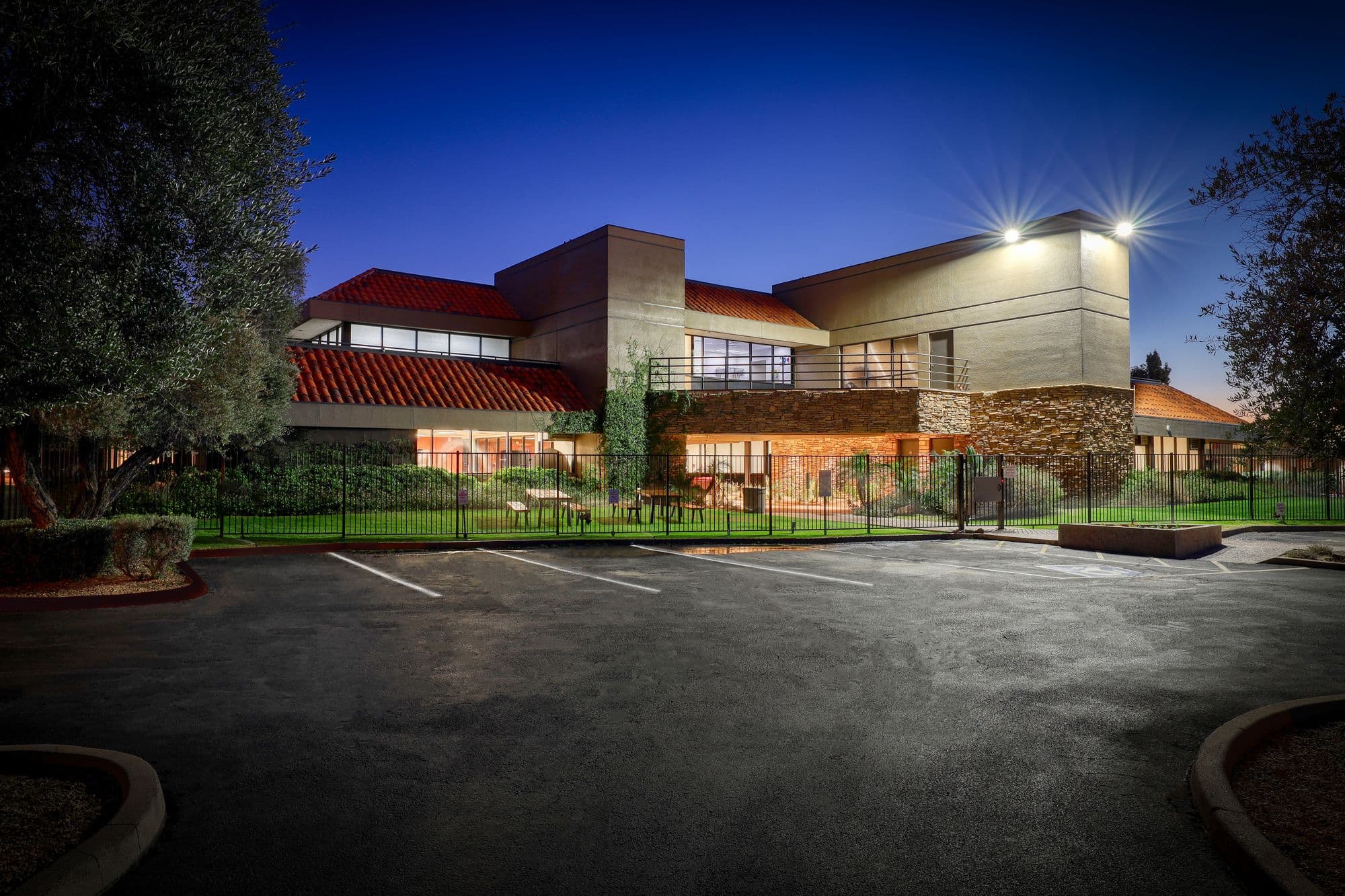
Pinnacle Peak Recovery's residential program is the structured, substance-free environment where the actual recovery work begins.
What residential treatment is for
The level of care where behavioral change begins.
Residential is for clients who need a structured, substance-free environment to begin the recovery work. Daily individual therapy, group programming, psychiatric care when indicated, and clinical staff on site around the clock.
Continuum of care
Around-the-clock medical supervision through the most physically demanding phase of recovery. Comfort-focused, evidence-based protocols.
Live on campus with structured therapy, group sessions, and clinical care. Time and space to do the work.
Day-program intensity with evening reintegration. The bridge between residential and outpatient life.
Continued therapy and accountability while you return to work, school, and family. Built for long-term success.
Insurance verification
Pinnacle Peak Recovery admissions runs a full benefits check before any commitment. We work with most major commercial carriers, including those listed below. Out-of-network reimbursement is also available on many other plans.
Verify in minutes
Pinnacle Peak Recovery admissions runs the benefits check. No commitment to enter treatment.
Or call 888-AZ-REHAB. Confidential, 24/7. Calls answered by Pinnacle Peak Recovery.
What residential looks like
Structure
Daily clinical programming on a structured schedule. Individual and group therapy, psychiatric care when indicated, and the time and space to do the work.
Continuity
Same clinical team through detox, residential, and step-down programming when applicable. The point is durable change, which is harder when you have to rebuild rapport mid-recovery.
Length
Typically up to 30 days, with the actual length determined by clinical need and what your insurance authorizes. Some clients stay longer when clinically indicated.
Common questions
Residential treatment (ASAM Level 3.5) is care where clients live at the facility, clinical staff are present around the clock, and the day is structured clinical programming: individual therapy, group work, and psychiatric care when indicated. It is not hospital-level care, which is reserved for clients who need 24-hour medical monitoring. It is the level of care where most of the durable behavioral work in treatment happens.
Typically up to about 30 days. The actual length is set by clinical need and what the client's insurance authorizes, both in conversation through the stay; Pinnacle Peak Recovery's utilization-review team handles the continued-stay reviews most commercial plans require. Some clients stay longer when it is clinically indicated; others step down to PHP sooner. The estimate given at intake is a clinical read, not a fixed term.
Residential treatment (ASAM 3.5) provides 24-hour clinical staffing in a non-hospital setting, for clients who are medically stable but need structure and daily clinical contact. Inpatient hospital-level addiction care (ASAM 3.7 and 4.0) provides 24-hour medical monitoring for clients in active withdrawal or with unstable medical or psychiatric conditions. For most clients, detox handles the medical-stabilization piece and residential is the treatment that follows.
Residential is usually the right call when detox just finished and the work hasn't started, when the home environment is actively working against recovery, when previous attempts at lower levels of care didn't hold, or when the clinical picture has weight to it (a serious co-occurring condition, a long use history, medical complications short of hospital care). Clients with a recovery-supportive home and a stable picture often start at PHP or IOP instead. Admissions and the clinical team make that call together on the assessment call.
Most major commercial plans cover medically-necessary residential treatment. Pinnacle Peak Recovery is in-network with Blue Cross Blue Shield, Cigna, Tricare, Ambetter, and a handful of smaller plans, with out-of-network reimbursement available on many others. Admissions runs a full benefits check before any commitment, and the number you get back is your real out-of-pocket exposure.
Local context
Most people picturing "rehab" are picturing residential treatment: you live at the facility, your days are structured, and for a stretch of weeks the one job is recovery. That picture is roughly right. Residential is the level of care where the actual behavioral work happens, and the reason it works is the thing people tend to treat as a side detail. The environment itself does part of the clinical job.
This page is about that level of care. It covers what residential treatment is at Pinnacle Peak Recovery's Scottsdale campus, who it is the right call for, what a week actually looks like, how length of stay really gets decided, and how the steps in and out of residential work. If you are trying to figure out whether you, or someone you are calling for, needs residential or can start at a lower level of care, that is the question this page exists to answer.
In the ASAM Criteria, the framework most addiction-medicine programs and insurers use to match a client to a level of care, residential treatment sits at Level 3.5: "clinically managed high-intensity residential." Translating that: clients live on site, clinical staff are present around the clock, and the programming is intensive, but it is not a hospital. Hospital-level addiction care (ASAM 3.7 and 4.0) is for clients who need 24-hour medical monitoring, meaning active withdrawal management or unstable medical or psychiatric conditions. Residential is for clients who are medically stable enough to do the work but need the structure, the separation from the using environment, and the daily clinical contact to actually do it.
That distinction matters because "inpatient" and "residential" get used interchangeably and they are not the same thing. Detox at Pinnacle Peak handles the medical-stabilization piece for clients who need it. Residential is where they go next. For clients who do not need detox, and many people entering treatment do not, residential is the entry point.
Early recovery asks a person to make a hundred small decisions a day that all push against a habit the brain has spent months or years reinforcing. Where to be at two in the afternoon. Whether to answer that call. What to do with the stretch of unstructured evening that used to be filled by using. Each of those decisions is a small tax on a depleted system, and the relapse data is consistent that the highest-risk window is the first few weeks, when the brain's reward and stress-regulation systems are still recalibrating.
Residential removes most of those decisions. The schedule is built. The environment is substance-free and the people in it are either in recovery or working in it. That is not about control for its own sake. It is about freeing up the cognitive and emotional bandwidth that early recovery needs and that an unstructured environment quietly drains. Clients often describe the first week of residential as the first time in a long time they could think straight, and that is not incidental. That is the design working.
It is also where the relationships form. Residential runs an 8:1 client-to-clinician ratio, and the clinical team, the peer group, and the daily rhythm of individual and group work are the things clients carry out of residential and into the rest of their recovery.
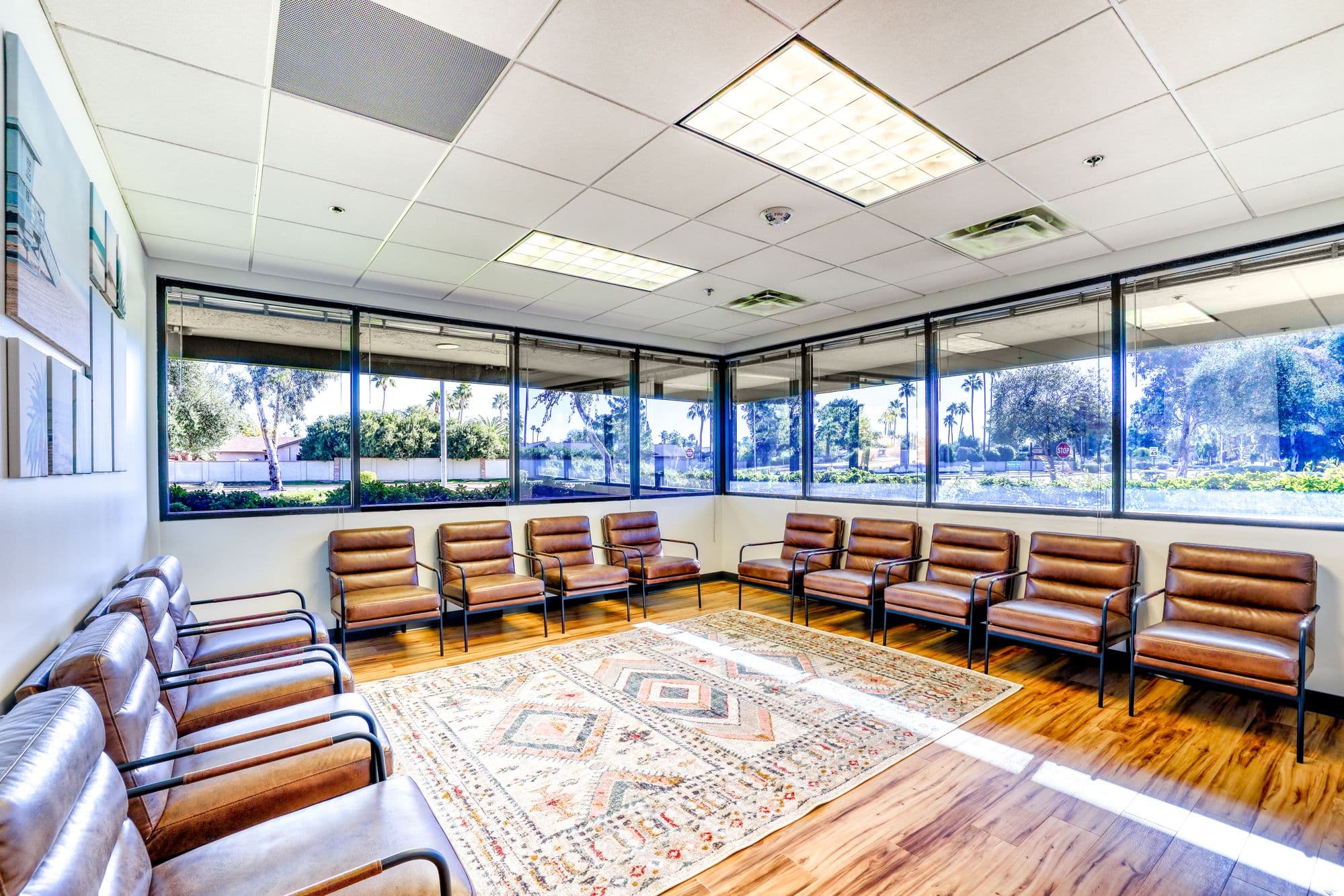
The schedule is full on purpose. A typical day runs from a morning check-in or community meeting through a sequence of group sessions, individual therapy on a regular cadence, and structured time that is still part of the program even when it is not a formal session: meals together, exercise, downtime that is deliberately not the unstructured void of early recovery at home.
The group work covers the things that build relapse resistance: understanding the disorder, recognizing the cues and patterns that drive use, building the coping skills that replace it, and working through the underlying material, meaning trauma, grief, and the mental-health conditions that so often sit underneath a substance use disorder. Individual therapy is where the client's specific picture gets worked. Psychiatric care is part of the program when it is indicated, which for clients with co-occurring depression, anxiety, bipolar disorder, or PTSD is most of them; the dual-diagnosis treatment page goes deeper on how that integration runs. In practice the day is structured from a morning check-in with the primary therapist through concurrent skills and process groups in the late morning, then rotating afternoon groups covering material like shame and guilt, stress management, boundaries, self-esteem, and relapse prevention, alongside experiential components such as movement, yoga, art, and sound healing. Evenings rotate through on-site and off-site recovery meetings, and family visitation is part of the weekend schedule.
What residential is not is a passive stay. The clients who get the most out of it are the ones who engage with the work, and the program is built to make engagement the path of least resistance rather than something a client has to manufacture against an empty schedule.
Residential at Pinnacle Peak typically runs up to about 30 days. The real answer to the length-of-stay question is that it is set by two things at once, clinical need and what the client's insurance authorizes, and those two are in conversation throughout the stay.
On the clinical side, 30 days is a common length because it is roughly the window in which the acute work gets done and the client is stable enough to step down. Some clients need longer, a more complex clinical picture, a co-occurring condition that needs more stabilization, a slower-than-typical trajectory, and stay longer when that is clinically indicated. Others are ready to step down to PHP earlier. Length of stay is a clinical decision, not a fixed package.
On the insurance side, most commercial plans authorize residential treatment in increments and review the case as it goes, a process called concurrent or continued-stay review. Pinnacle Peak's utilization-review team handles those reviews, submitting the clinical documentation that supports each authorization. What that means for a client: the number admissions gives you at intake is a clinical estimate, not a contract, and the team works the authorization on your behalf as the stay progresses rather than leaving you to negotiate it. For most in-network carriers the first authorization typically runs seven to fourteen days, the next five to ten, and shorter increments after that, with the actual lengths turning on acuity, clinical progress, and medication needs.
Residential is the right level of care when some combination of these is true: detox just finished and the body is stable but the work has not started; the home environment is actively working against recovery (people using in the house, no support, the daily geography of the addiction still in place); previous attempts at lower levels of care did not hold; the clinical picture has weight to it, a serious co-occurring condition, a long use history, medical complications that need monitoring short of hospital care; or the simple fact that the structure and separation are what this person needs to get traction.
Residential is not automatically the right answer for everyone. Some clients have a genuinely recovery-supportive home, work or caregiving obligations that make a month away destabilizing in its own right, and a clinical picture that supports starting at partial hospitalization or intensive outpatient. The ASAM framework exists precisely to match the level of care to the person rather than defaulting everyone to the most intensive option. Admissions and the clinical team make that call together, with the client, on the verification and assessment call, and if a lower level of care is the better fit, that is what they will say.
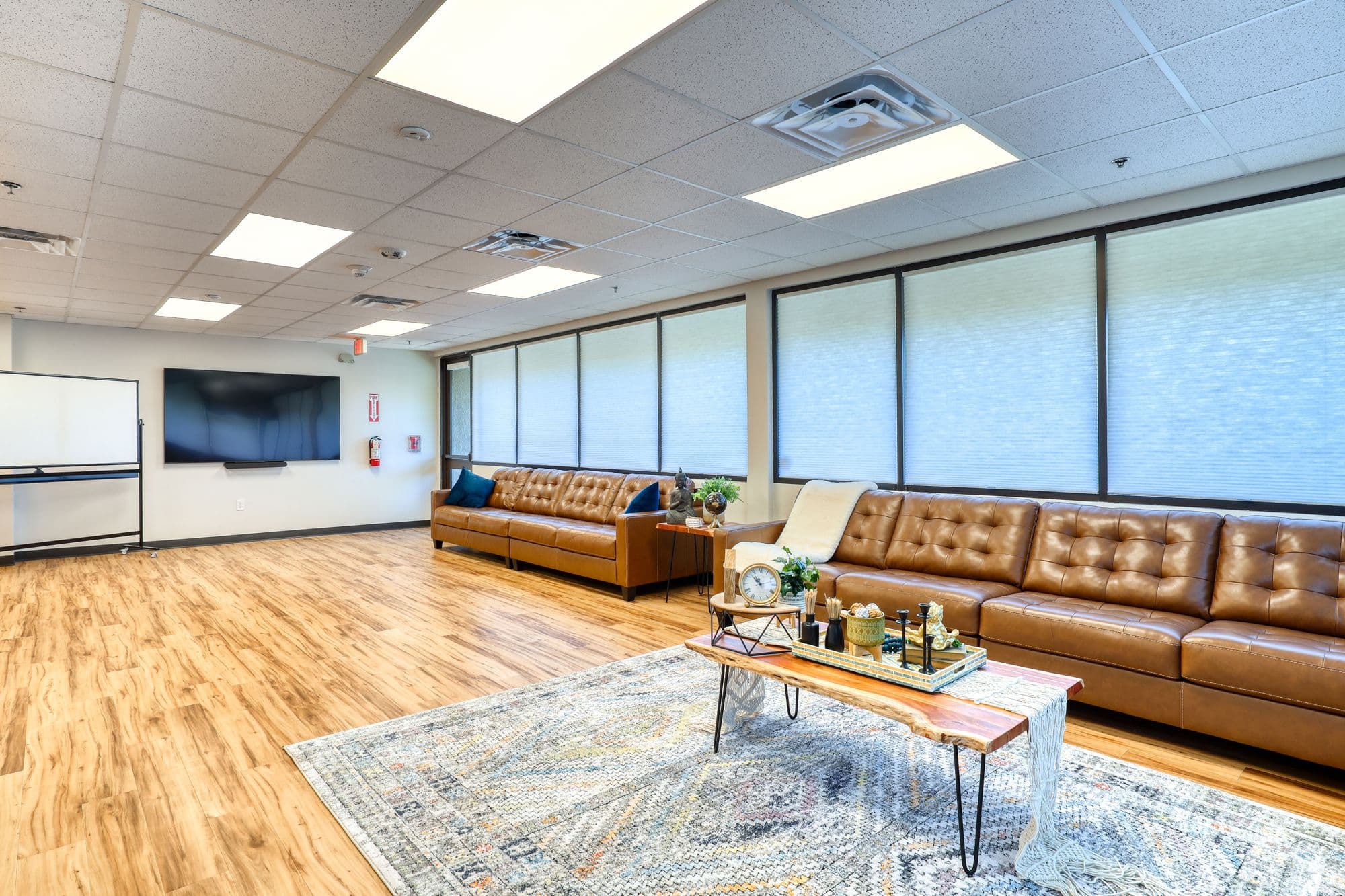
Most clients arrive in residential one of two ways: stepping over from detox once the body is stable, or coming straight in at intake when detox is not clinically necessary. Pinnacle Peak runs detox at a dedicated site within a few miles of the residential campus, and the handoff between the two is internal: same admissions team, same care plan, the clinical staff in conversation, the records moving with the client. A client finishing detox is not discharged and told to find a residential bed. The next step is already built.
The step out of residential is the one that matters most for long-term outcomes, because the data on detox-only and short-residential-only treatment is consistent: the clients who do well are the ones who step down through continuing care rather than going from a structured environment straight back to an unstructured one. From residential, the standard next step is partial hospitalization (PHP), day-program intensity with the client sleeping at home or in supportive housing, and then intensive outpatient (IOP), and then aftercare. The clinical team builds that step-down sequence with the client during the residential stay rather than at the end of it, so the transition is planned, not improvised. Clients who step down to PHP and IOP work with a new primary therapist at the outpatient level rather than carrying the residential one forward, but the aftercare and alumni plan is built throughout the residential stay, so what changes is the clinician, not the continuity of the plan.
Do I really have to leave for a month? Up to about 30 days is the typical residential length, and yes, it means being away. For a lot of people that sounds impossible right up until they weigh it against where the alternative leads. FMLA covers many people in employer-sponsored situations, admissions can walk through how to handle the absence with an employer in a way that protects your privacy, and the clinical team can sometimes build a plan that starts at a lower level of care if a full residential stay genuinely is not workable. The first call is where that gets sorted, specifically, for your situation.
Is residential the same as being in a hospital? No. Residential is ASAM Level 3.5: clinical staff around the clock, but not 24-hour medical monitoring. The campus is set up to feel residential, not clinical. Hospital-level addiction care (ASAM 3.7 and 4.0) exists for clients in active withdrawal or with unstable medical or psychiatric conditions. For most people, detox handles the medical-stabilization piece and residential is the treatment that follows.
What if I cannot do the full stay? Length of stay is a clinical conversation, not a locked contract. Some clients step down to PHP earlier than 30 days when they are ready. If a shorter residential stay or a different starting level of care is the realistic plan, that conversation happens up front. What the clinical team will not do is pretend a too-short plan is adequate when it is not.
What does it cost? Most major commercial insurance covers residential treatment, and Pinnacle Peak is in-network with Blue Cross Blue Shield, Cigna, Tricare, Ambetter, and a handful of smaller plans, with out-of-network reimbursement available on many others. Admissions runs a full benefits check before you commit to anything, and the number you get back is your real out-of-pocket exposure, not an estimate that changes after you arrive. If you do not have insurance, that conversation happens openly on the call.
Is it confidential? Yes. Substance use treatment records are protected by the federal 42 CFR Part 2 rules on top of HIPAA, which means they generally cannot be released to third parties, including most employers, without your written consent. Admissions can walk through what that means in practice on the first call.
For the level-of-care fundamentals most families want before the first call:
And the rest of the continuum of care at Pinnacle Peak:
Alumni voices
“Pinnacle Peak Recovery is an amazing facility that provided me the skills and knowledge to overcome my addiction and start a new sober life.”
“This is a great place if you are truly looking to recover. They took the time to invest in me and make sure that I have the proper tools to stay sober.”
“The staff, clinical practitioners, and medical care providers were all fantastic people who really helped me in my process of recovery.”
References
Ready when you are
Confidential. Free. No commitment to enter treatment. Pinnacle Peak Recovery admissions answers, usually in under a minute.
Arizona service area
Pinnacle Peak Recovery accepts clients from across the Phoenix metro and greater Arizona. Treatment happens at the Scottsdale campus.