Published by Pinnacle Peak Recovery · a licensed addiction treatment facility in Scottsdale, AZ. Calls answered by Pinnacle Peak Recovery admissions staff.
Located in Scottsdale, Pinnacle Peak Recovery's residential program draws clients from across Arizona, including Flagstaff. The campus is roughly two and a half hours away down Interstate 17, and supportive housing near the campus means the step-down phase can be done on site rather than commuting from northern Arizona.
The Pinnacle Peak Recovery campus is in Scottsdale, AZ. We accept clients from Flagstaff and across the broader Phoenix metro. Treatment happens at the Scottsdale facility, not in Flagstaff.
Getting here from Flagstaff
The drive, and what arrival looks like
Getting here
Flagstaff is roughly two and a half hours from the Scottsdale campus down Interstate 17. Many in northern Arizona travel down for the residential phase; admissions can walk through the route and the timing, the I-17 winter weather included, on the first call.
When you arrive
The first hours on campus are about getting you settled, fed, and through the intake assessment. Paperwork happens around you, not in front of you.
Continuum of care
Programs available to Flagstaff clients
Step 01
Medical detox
3 to 7 days
Around-the-clock medical supervision through the most physically demanding phase of recovery. Comfort-focused, evidence-based protocols.
Step 02
Residential treatment
Typically up to 30 days
Live on campus with structured therapy, group sessions, and clinical care. Time and space to do the work.
Step 03
Partial hospitalization (PHP)
2 to 4 weeks
Day-program intensity with evening reintegration. The bridge between residential and outpatient life.
Step 04
Intensive outpatient (IOP)
4 to 8 weeks
Continued therapy and accountability while you return to work, school, and family. Built for long-term success.
Local context
Substance use and treatment access in Flagstaff
Flagstaff sits at around seven thousand feet in northern Arizona, anchored by Northern Arizona University and the regional medical center, and serves as the regional hub for a large catchment of northern Arizona. It has more behavioral-health infrastructure than a town its size would otherwise, partly because of NAU and the hospital, but residential substance-use treatment capacity is thin: outpatient and crisis care exist locally, but the structured live-in level of care a serious substance use disorder needs is mostly down the hill. Pinnacle Peak Recovery is not in Flagstaff. The residential campus is in Scottsdale, in the McCormick Ranch area off Hayden and Shea just south of the Scottsdale Airpark, roughly two and a half hours down Interstate 17, with a separate medical-detox site less than three miles away.
What follows is the Flagstaff-specific picture: how a substance use disorder tends to present here, what the local treatment landscape covers and where it stops, how the I-17 trip to the Scottsdale campus and the rest of the continuum work across two and a half hours of distance, and the questions that come up most on a first call from Flagstaff.
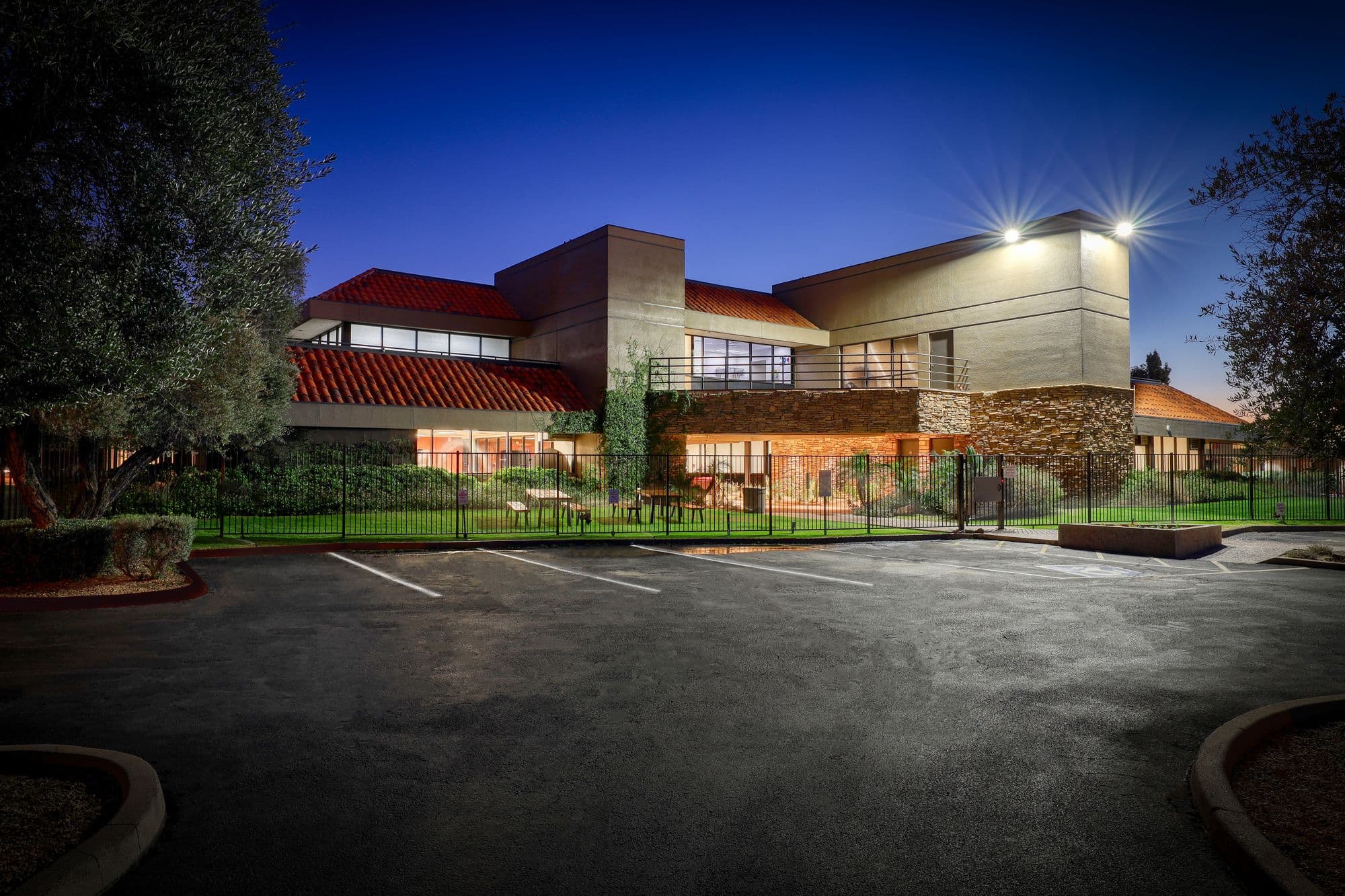
The Scottsdale campus in McCormick Ranch, roughly two and a half hours down Interstate 17 from Flagstaff
How a substance use disorder tends to develop in Flagstaff
The substances coming through Flagstaff calls are not different from the rest of the state's. Alcohol is what most people are in treatment for, here as everywhere; the opioid landscape is now overwhelmingly fentanyl, including counterfeit pills pressed to look like oxycodone or alprazolam where the pathway was once heroin or prescription bottles; methamphetamine is the leading stimulant and often appears with the opioid use rather than on its own; a meaningful share of opioid use disorders trace back to a prescription whose script outlasted the medical reason; and depression, anxiety, PTSD, and trauma sit alongside most of it. What altitude, climate, and a campus economy add are three Flagstaff-flavored layers on top of that.
The first is the seasonal-service-economy pattern. Flagstaff runs heavily on tourism, hospitality, and outdoor recreation, which means a workforce with seasonal swings, irregular hours, and a lot of off-season downtime. The version of a substance use disorder that grows in that soil tends to be alcohol- and cannabis-led, easy to file as "that's just the season," and slow to get named. The timing of treatment around a seasonal schedule is its own problem, and admissions works through it on the call.
The second is the long-winter layer. Flagstaff sits at around seven thousand feet, and the winters are long and dark in a way that is unusual for Arizona. Seasonal mood patterns are real here, and for some people the drinking that starts as a way through the winter does not stop in the spring. When a mood condition is driving the substance use rather than the other way around, that is the kind of co-occurring picture the dual-diagnosis treatment work is built for, and it is one reason a structured residential stay can be the right level of care rather than another round of outpatient.
The third is the campus-and-young-adult layer. Northern Arizona University puts a large student and recent-graduate population in town, and the patterns that come with that, the drinking, the pills sourced through friends rather than a pharmacy, the counterfeit-pill risk that any non-pharmacy pill now carries, show up on calls from the Flagstaff area as they do near any major university. The fentanyl-laced counterfeit pill is the sharp edge of it: a relapse after a stretch of abstinence carries a real overdose risk because tolerance resets, and the supply is not what it looks like. The fentanyl addiction treatment page and the what to expect in detox guide go into that in depth. By per-capita rate, Coconino County ranks among the highest in Arizona for overdose deaths, per Arizona Department of Health Services surveillance.
What the local treatment landscape offers, and where it stops
Flagstaff is well-resourced for outpatient and crisis-side care relative to its size, partly because of NAU and the regional medical center: there are outpatient providers and counseling practices, community and county behavioral-health services, Flagstaff Medical Center for medical and psychiatric crisis, NAU Counseling Services and the broader student health system, and the resources tied to Coconino County and the regional VA. Named Flagstaff-area resources include The Guidance Center and Northern Arizona Substance Abuse Services for community behavioral health, NAU Counseling Services for students, the Solari Crisis Line, and the national SAMHSA Helpline.
What Flagstaff does not have, in any concentration, is residential capacity, the structured live-in level of care a person needs once a serious substance use disorder is in place. That shortage shapes the decision a Flagstaff family is actually making. It is rarely "which of several local residential programs do we pick"; it is "do we go down the hill for the residential phase, and where." The Phoenix metro is where Arizona's residential SUD capacity is concentrated, and the Scottsdale campus is one of those options. The question is not "why us over the place across town," because there usually is not one. It is whether leaving for residential makes sense, what the I-17 trip looks like, and what happens to the step-down phase when the program is two and a half hours from home.
Getting to the Scottsdale campus from Flagstaff
The drive from Flagstaff to the McCormick Ranch campus is roughly two and a half hours straight down Interstate 17. I-17 closes in winter storms more often than most Arizona freeways, and admissions can walk through the weather and the timing on the first call. Medical detox at the dedicated site (less than three miles from the residential campus) hands off internally to residential, with no break in the clinical team or the care plan. The medical detox page covers stabilization in depth.
The two-and-a-half-hour distance changes the shape of the back half of treatment more than the front. Residential itself does not depend on family being a short drive away: family contact during residential is structured and often happens by phone and video, with a planned weekend drive down from Flagstaff workable when in-person is the better fit. The PHP and IOP phases assume a client who can get to the campus several days a week, which is not workable from Flagstaff, so the program runs supportive housing near the campus: someone from Flagstaff can stay in that housing through the PHP and IOP weeks and do the whole continuum without going home in between. If going home for the outpatient phase is the better call instead, the residential team hands the plan off to outpatient providers in Flagstaff rather than leaving the client to start over cold. The clinical team builds the version that fits during the residential stay.
The starting-level decision is clinical (the winter-mood-and-drinking pattern that is common in Flagstaff often shifts that toward the higher-intensity end), and the inpatient vs. outpatient guide covers how that gets made. For someone from Flagstaff the front end (detox, residential) means coming down the hill for a few weeks; the back end (PHP, IOP) typically runs from supportive housing near the campus, or hands off to outpatient providers closer to home once that phase begins.
What the first call covers
The clinical conversation. Substances in play, history, current symptoms, prior treatment, mental-health context. If the program is not a clinical fit, admissions says so and points you elsewhere.
Coverage and cost. Benefits are run on the call. The insurance pages have the carrier detail; if you do not have insurance, that conversation happens openly.
The trip and day one. The I-17 route from Flagstaff (roughly two and a half hours, with winter-weather timing worth thinking through) and what day one on campus looks like.
The line is staffed around the clock. The call itself does not commit you to treatment.
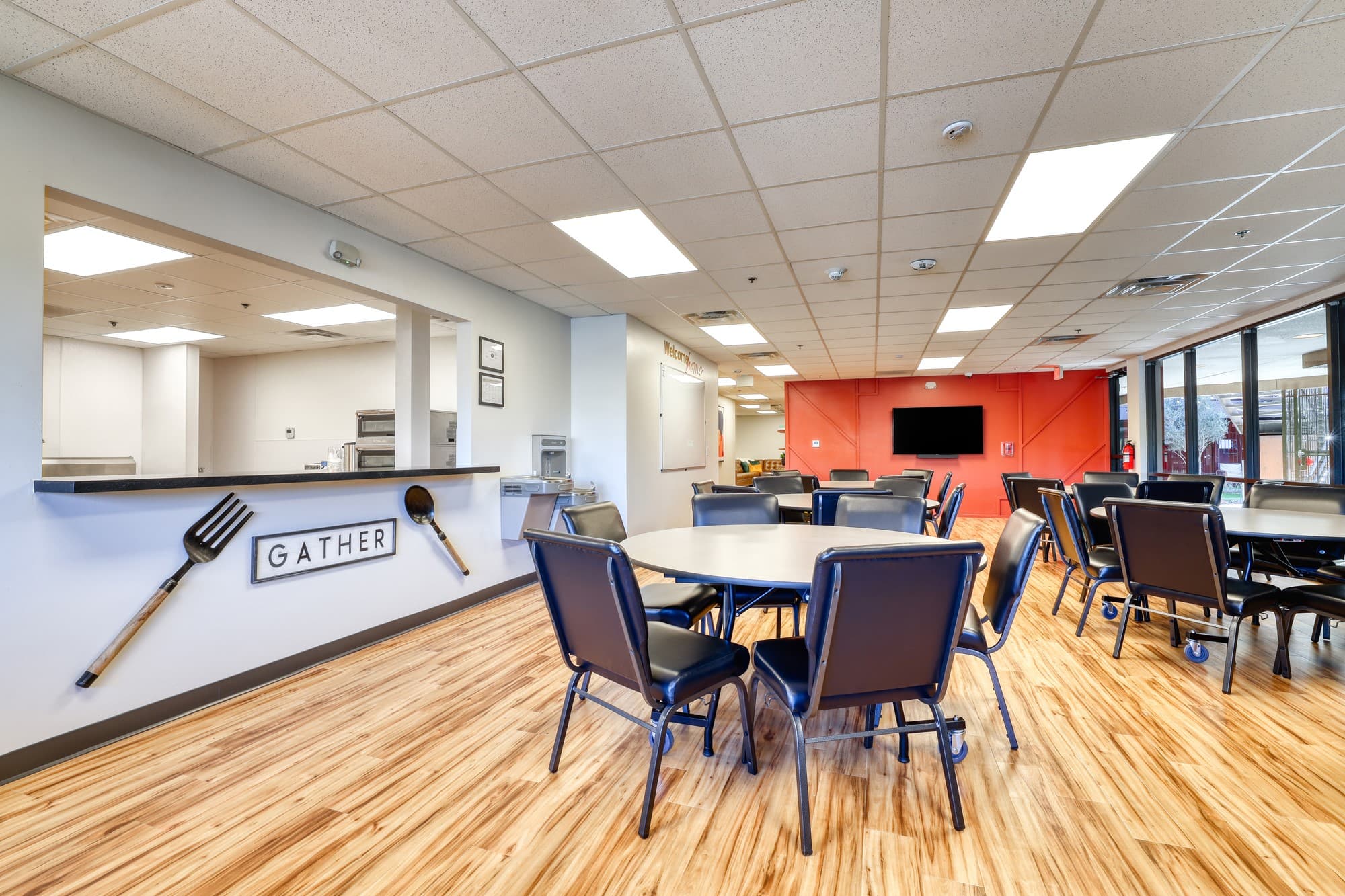
A shared space on the residential campus
What recovery looks like after the residential phase
For someone from Flagstaff, the post-residential months are the part of treatment with the most moving pieces. A meaningful part of that stretch is the geography decision made before discharge (step down in the Phoenix area through the program's supportive housing, or back in Flagstaff with outpatient providers and the residential team handing off the plan), which determines what those months even look like. Relapses cluster in that early-back-out window, which is why discharge planning starts well before the residential stay ends rather than after.
The conversations that decide whether the work holds are practical, and for someone going back to Flagstaff they are specific to the place: where the client will live and whether that environment is safe yet; who is in their daily life and which of those people are recovery-aligned; what going back to work looks like, including a seasonal schedule if that applies; how family handles the role they took on in family programming; and the client's specific high-risk situations, with a plan for each. For a client returning to a town built around tourism and a long off-season, the relapse-prevention plan has to account for the stretches of unstructured time, because unstructured time is where a lot of early relapses happen. The winter-season drinking pattern that runs through a lot of Flagstaff intake calls is what the alcohol piece of aftercare has to be most specific about, and the alcohol rehab page goes deeper into how that planning carries through the off-season and the next winter.
Pairs well with
For the clinical fundamentals most families want before the first call:
Pinnacle Peak Recovery admissions runs a full benefits check for Flagstaff residents before any commitment. We work with most major commercial carriers, including those listed below. Out-of-network reimbursement is also available on many other plans.
Verify in minutes
We work with most major carriers.
Pinnacle Peak Recovery admissions runs the benefits check. No commitment to enter treatment.
BlueCross BlueShield
Aetna
UnitedHealthcare
Cigna
Ambetter
Tricare
+ more
Or call 888-AZ-REHAB. Confidential, 24/7. Calls answered by Pinnacle Peak Recovery.
No. Pinnacle Peak Recovery is in Scottsdale, in the McCormick Ranch area off Hayden and Shea, roughly two and a half hours from Flagstaff down Interstate 17. This page is for Flagstaff and northern-Arizona residents looking at residential treatment options in the state.
Why would someone from Flagstaff travel to Scottsdale for treatment?+
Residential SUD treatment is concentrated in the Phoenix metro, and for many in northern Arizona the realistic choice for a structured residential stay is a program down the hill. The trip is roughly two and a half hours, and the residential phase does not depend on family being a short drive away the way ongoing outpatient would. For the step-down phases (PHP, IOP), the program runs supportive housing near the campus, so someone from Flagstaff can stay for the whole continuum without going home in between; if going home for the outpatient phase is the better call instead, the residential team hands the plan off to providers closer to Flagstaff.
Is the I-17 distance a dealbreaker?+
This is the worry that is genuinely different for Flagstaff. Residential treatment is a defined stretch, not an open-ended absence; the I-17 trip is something admissions helps you plan around, weather included; and when the local options are outpatient and the situation calls for residential, the choice is usually going down the hill for that phase or not getting that level of care at all. The first call works out the specifics for your situation.
What insurance does Pinnacle Peak Recovery accept from Flagstaff residents?+
We're in-network with Blue Cross Blue Shield, Cigna, Tricare, Ambetter, and a handful of smaller plans. Admissions runs a full verification before any commitment. Out-of-network reimbursement is available on many other plans, including Aetna, UnitedHealthcare, and Beacon Health Options.
What conditions does the program treat?+
Substance use disorders across the common scope (alcohol, opioids including heroin, fentanyl, and prescription opioids, methamphetamine, cocaine, benzodiazepines, and prescription-drug misuse), with co-occurring depression, anxiety, bipolar disorder, PTSD, and trauma addressed integrally.
Will my employer or NAU find out?+
Substance use treatment records are protected by the federal 42 CFR Part 2 confidentiality rules in addition to HIPAA, which means they generally cannot be released to third parties, including most employers or schools, without your written consent. Admissions can walk through what that means in practice on the first call, including how a treatment absence can be handled with an employer or NAU without disclosing why.
What about family?+
The program is built so family stays involved. For someone from Flagstaff that involvement is structured around the distance, by phone and video during residential and a planned drive down when that works, and more directly during the step-down phase wherever it happens.
What will it cost?+
Most major commercial insurance is in network. Pinnacle Peak Recovery is in-network with Blue Cross Blue Shield, Cigna, Tricare, Ambetter, and a handful of smaller plans, with out-of-network reimbursement available on many others, including Aetna, UnitedHealthcare, and Beacon Health Options. Admissions runs the verification before you commit to anything.
Is it bad enough to warrant a call?+
If you have read this far, the question is already live for you. The call is not a commitment. It is a conversation that ends with a clearer picture of what your options actually are.
Alumni voices
What former clients say
★★★★★
“Pinnacle Peak Recovery is an amazing facility that provided me the skills and knowledge to overcome my addiction and start a new sober life.”
★★★★★
“This is a great place if you are truly looking to recover. They took the time to invest in me and make sure that I have the proper tools to stay sober.”
★★★★★
“The staff, clinical practitioners, and medical care providers were all fantastic people who really helped me in my process of recovery.”
Find us
Directions from Flagstaff to the Scottsdale campus
Pinnacle Peak Recovery8070 East Morgan Trail Unit 200 Scottsdale, AZ 85258
Pinnacle Peak Recovery is at 8070 East Morgan Trail Unit 200, Scottsdale, AZ 85258. From Flagstaff, the campus is reached down Interstate 17, roughly two and a half hours. Admissions can walk through the route on the first call.