Step 01
Medical detox
3 to 7 daysAround-the-clock medical supervision through the most physically demanding phase of recovery. Comfort-focused, evidence-based protocols.
Published by Pinnacle Peak Recovery · a licensed addiction treatment facility in Scottsdale, AZ. Calls answered by Pinnacle Peak Recovery admissions staff.
About this site →Arizona · Partial hospitalization
Pinnacle Peak Recovery's PHP is the day-program intensity step-down between residential and intensive outpatient.

What PHP is for
The bridge between residential and outpatient life.
PHP is for clients stepping down from residential, or for clients whose clinical picture warrants day-program intensity without 24/7 supervision. Five to six hours of structured clinical programming per day.
Continuum of care
Around-the-clock medical supervision through the most physically demanding phase of recovery. Comfort-focused, evidence-based protocols.
Live on campus with structured therapy, group sessions, and clinical care. Time and space to do the work.
Day-program intensity with evening reintegration. The bridge between residential and outpatient life.
Continued therapy and accountability while you return to work, school, and family. Built for long-term success.
Insurance verification
Pinnacle Peak Recovery admissions runs a full benefits check before any commitment. We work with most major commercial carriers, including those listed below. Out-of-network reimbursement is also available on many other plans.
Verify in minutes
Pinnacle Peak Recovery admissions runs the benefits check. No commitment to enter treatment.
Or call 888-AZ-REHAB. Confidential, 24/7. Calls answered by Pinnacle Peak Recovery.
What PHP looks like
Schedule
Five to six hours of structured clinical programming per day, typically five days a week. Clients sleep at home or in supportive housing.
Programming
Group therapy, individual therapy, psychiatric care when indicated, and the same clinical team continuing the residential work.
Length
Typically 2 to 4 weeks, with the actual length determined by clinical progress and what your insurance authorizes.
Common questions
PHP (ASAM Level 2.5) is a day program: roughly 20 or more hours of structured clinical treatment a week, usually five to six hours a day, five days a week, with the client living at home or in supportive housing rather than at the facility. Despite the name, there is no hospital involved. It is the day-program intensity step between residential treatment and intensive outpatient.
At home, or in supportive housing if the home environment isn't recovery-supportive. Coordinating that housing is part of what admissions and the clinical team work out, because PHP only works if the off-program hours aren't actively undermining the on-program work.
PHP is a five-to-six-hour day, five days a week, so it generally isn't compatible with a full-time daytime job. Some clients arrange a leave (FMLA covers many employer-sponsored situations) for the PHP stretch and return to work when they step down to IOP. Admissions can walk through what a specific situation realistically allows.
Mostly hours and intensity. PHP is roughly 20-plus hours a week, five to six hours a day. IOP is roughly nine to nineteen hours a week, and at Pinnacle Peak about fifteen hours, three hours a session, five days a week, often scheduled around work. PHP is the bridge out of residential; IOP is the longer consolidation phase that coexists with a normal schedule.
Usually about two to four weeks, set by clinical progress and what the client's plan authorizes; Pinnacle Peak Recovery's utilization-review team handles the continued-stay reviews. Stepping down to IOP earlier is common when consolidation is going well; staying longer happens when more time at this intensity is clinically warranted.
Most major commercial plans cover medically-necessary partial hospitalization. Pinnacle Peak Recovery is in-network with Blue Cross Blue Shield, Cigna, Tricare, Ambetter, and a handful of smaller plans, with out-of-network reimbursement available on many others. Admissions runs a full benefits check before any commitment.
Local context
The name "partial hospitalization" is a little misleading. There is no hospital involved, and for most clients there never was. PHP is a day program: you spend a substantial part of the day in structured clinical treatment, then you go home, or to supportive housing, and sleep there. It is the level of care that sits between living at a treatment facility and living a normal life with treatment fitted into it, and it exists because that gap is exactly where recovery most often falls apart.
This page covers what partial hospitalization is at Pinnacle Peak Recovery's Scottsdale campus, who it is the right call for, what the schedule actually looks like, and how it differs from the levels of care on either side of it. If you are weighing PHP against residential, or against intensive outpatient, the question of which one fits is the thing this page is built to help with.
In the ASAM Criteria, partial hospitalization is Level 2.5. The defining feature is intensity without 24-hour supervision: roughly 20 or more hours of structured clinical programming a week, with the client living off site. At Pinnacle Peak the PHP day runs from 8:30 am to 3:45 pm Monday through Friday, and clients who need a stable place to live during this stretch can use the supportive-housing options the program coordinates, so the days are spent in treatment and the nights in a sober setting.
That puts it a step below residential (Level 3.5, where clients live on the campus and clinical staff are present around the clock) and a step above intensive outpatient (Level 2.1, roughly nine to nineteen hours a week). The clinical content overlaps a lot with residential, group therapy, individual therapy, psychiatric care when it is indicated, but the structure is fundamentally different, and that difference is the point.
There is a well-documented pattern in addiction treatment: a client does well in a contained, structured environment, transitions out of it, and relapses within weeks. It is not a failure of will and it is usually not a failure of the residential work. It is a failure of the transition. A person who has spent a month in an environment that made a hundred recovery decisions for them is suddenly making all of those decisions again, in the environment where the addiction was built, with the structure that was holding things together removed all at once.
PHP is the answer to that. Instead of going from full structure to no structure overnight, the client steps down: the days are still anchored by the program, the clinical contact is still daily, the peer group is still there, but the evenings, the home environment, the obligations that have to coexist with recovery are all back in the picture and being worked on in real time. When something comes up, a craving triggered by walking past a particular place, a hard conversation with family, the first unstructured Saturday, it gets brought into the next day's session instead of being faced alone. PHP turns the transition into a process with a clinical safety net rather than a cliff.
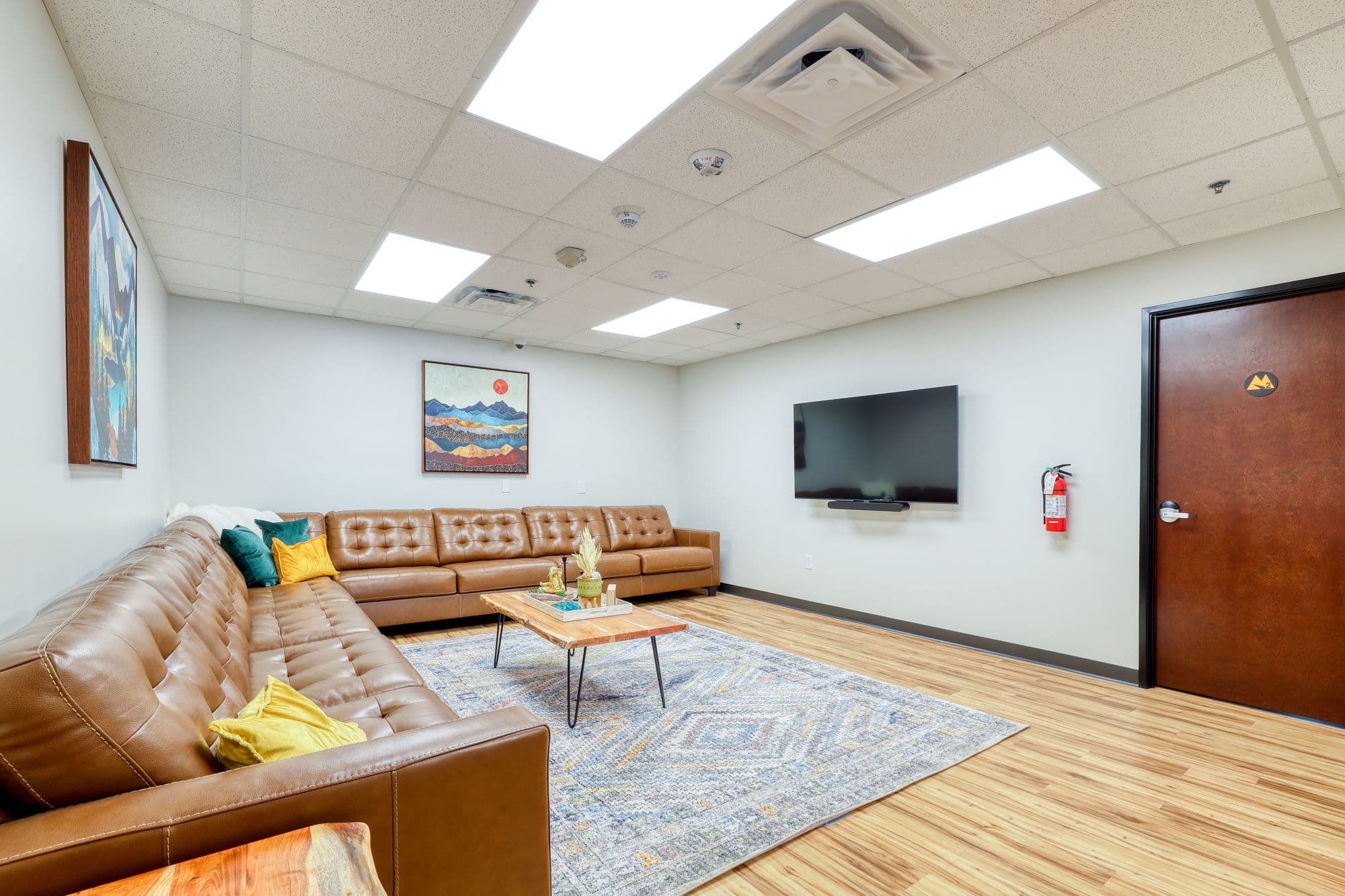
A PHP day is built around group and individual clinical work, much like residential, compressed into the daytime hours. Groups cover relapse-prevention skills, the cognitive and behavioral patterns that drive use, processing of underlying trauma and grief, and the practical work of rebuilding a life that has room for recovery in it: relationships, work, structure, sober support outside the program. Individual therapy continues on a regular cadence. Psychiatric care is part of the program for clients who need it, and for clients with co-occurring conditions, which is most of them, the mental-health work and the substance-use work happen together rather than in separate tracks; the dual-diagnosis treatment page covers that integration in depth. Individual therapy continues at least once a week, and family programming is part of the model, shaped to each client's situation rather than run to a fixed template.
What is different from residential is what happens after the program day ends. The client goes home or to supportive housing, and the evening is theirs, which means the evening is also part of the treatment, in the sense that how it goes becomes material for the next day. PHP works because that real-world exposure is happening with the program right there to process it, not because the exposure is being avoided.
PHP at Pinnacle Peak typically runs about two to four weeks. As with every level of care, the actual length is set by clinical progress and what the client's plan authorizes, with the utilization-review team handling the continued-stay reviews that most commercial plans require. A client who is consolidating well steps down to IOP sooner; a client who needs more time at this intensity stays longer when that is clinically supported.
PHP is the right level of care in two situations. The first is the step-down: a client finishing residential who is stable and engaged but for whom going straight to a few hours of outpatient a week would be too big a drop. The second is the direct entry: a client whose clinical picture supports day-program intensity from the start without a residential stay first, meaning a recovery-supportive home environment, the absence of an acute medical or stabilization need, and a level of risk and complexity that PHP can hold. The strongest direct-entry candidates are clients who are no longer actively withdrawing and are medically stable, with a home that supports recovery.
It is the wrong call when a client needs the full containment of residential, an actively using household, no support, a clinical picture that needs 24-hour clinical presence, or when the picture is stable enough that IOP is genuinely sufficient and PHP would be more structure than the situation calls for. The ASAM framework is built to match the level to the person, and admissions and the clinical team make that call together on the assessment call, including the call to recommend a different level than the one a client came in asking about.
Where do I sleep? At home, or in supportive housing if home is not recovery-supportive and you need a stable place to be. Coordinating that housing is part of what admissions and the clinical team work out, because PHP only works if the off-program hours are not actively undermining the on-program work.
Can I work during PHP? PHP is a five-to-six-hour day, five days a week, so it is not compatible with a full-time daytime job in the way IOP often is. Some clients arrange a leave (FMLA covers many employer-sponsored situations) for the PHP stretch and return to work when they step down to IOP. Admissions can walk through what your situation realistically allows.
Is PHP a step down or a step up? Either, depending on where you are coming from. For a client leaving residential, it is a step down. For a client entering treatment whose picture supports it, it is the entry point. It is the same program either way; what changes is where it sits in the sequence.
What is the difference between PHP and IOP? Mostly hours and intensity. PHP is roughly 20-plus hours a week, five to six hours a day. IOP is roughly nine to nineteen hours a week, and at Pinnacle Peak about fifteen hours, three hours a session, five days a week, often scheduled around work. PHP is the bridge out of residential; IOP is the longer consolidation phase that coexists with a normal schedule. The PHP vs. IOP guide breaks the comparison down in detail.
What does it cost, and is it confidential? Most major commercial plans cover PHP; Pinnacle Peak is in-network with Blue Cross Blue Shield, Cigna, Tricare, Ambetter, and a handful of smaller plans, with out-of-network reimbursement available on many others. Admissions runs the full benefits check before you commit to anything. And substance use treatment records are protected by federal 42 CFR Part 2 confidentiality rules in addition to HIPAA, so they generally cannot be released to third parties, including most employers, without your written consent.
For the level-of-care fundamentals most families want before the first call:
And the rest of the continuum of care at Pinnacle Peak:
Alumni voices
“Pinnacle Peak Recovery is an amazing facility that provided me the skills and knowledge to overcome my addiction and start a new sober life.”
“This is a great place if you are truly looking to recover. They took the time to invest in me and make sure that I have the proper tools to stay sober.”
“The staff, clinical practitioners, and medical care providers were all fantastic people who really helped me in my process of recovery.”
References
Ready when you are
Confidential. Free. No commitment to enter treatment. Pinnacle Peak Recovery admissions answers, usually in under a minute.
Arizona service area
Pinnacle Peak Recovery accepts clients from across the Phoenix metro and greater Arizona. Treatment happens at the Scottsdale campus.